A load of rubbish: the price of loyalty
It's August, which in our house means it's time to renew the weekly rubbish collection. We've been with the same company for about eight years, and like clockwork, the invoice landed this morning with the usual price increase.
I had some spare time, so before committing to another year I did what I do every year: checked whether anyone else could do it cheaper. Nobody was, same as always. But this year I had a thought I hadn't had before, so I went to my own provider's website, entered our address, and selected the exact same bin size and collection frequency we already have. They quoted me $47 cheaper.
There's no 'introductory price' disclaimer. No 'first year discount' warning that the price climbs once you're locked in. Just a straight $47 gap between what I pay as an existing customer and what I'd pay if I signed up tomorrow, for the same bins, collected on the same day, by the same trucks.
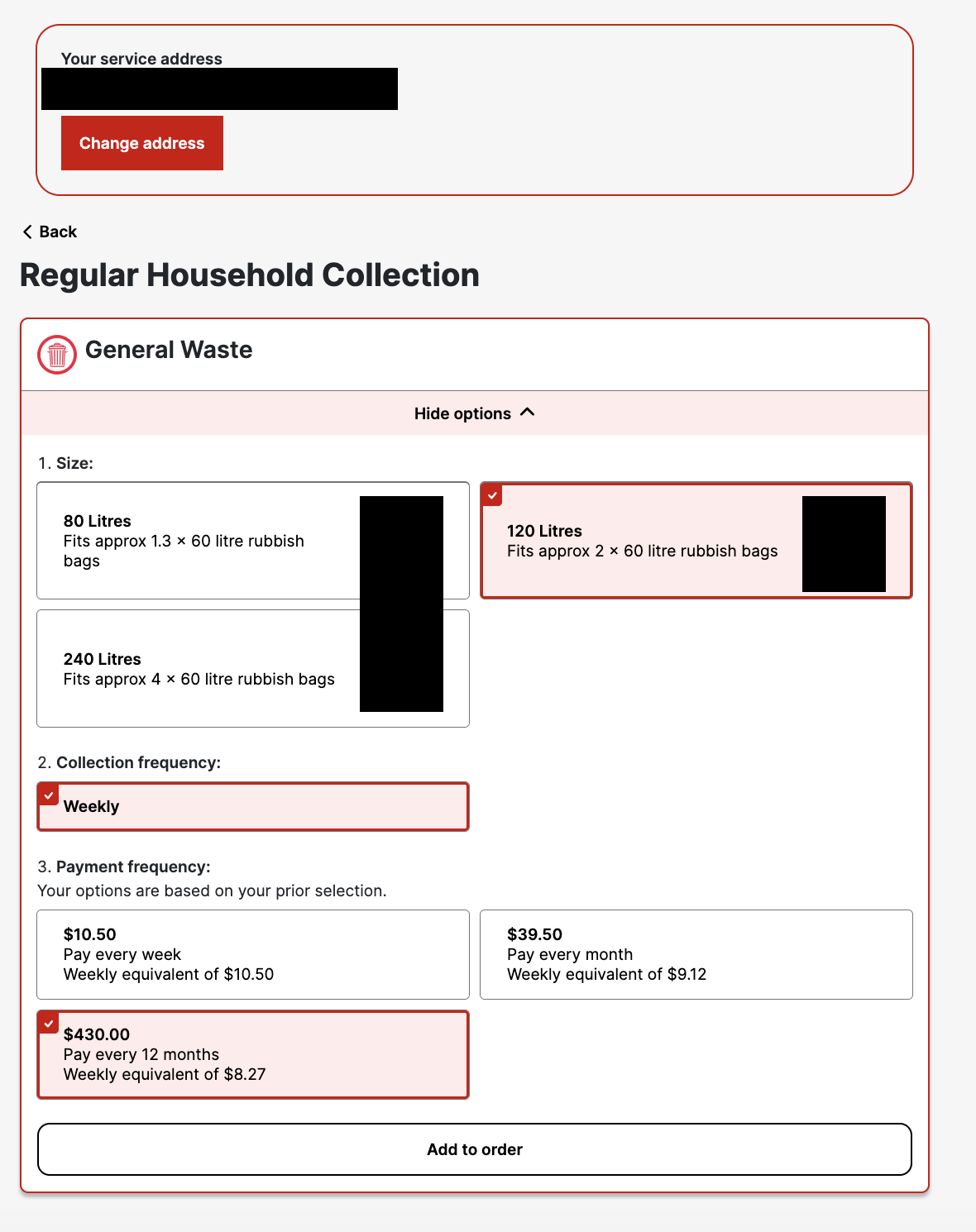
What a new customer would pay: $430 a year for the exact same bin, size, and collection frequency I already have.
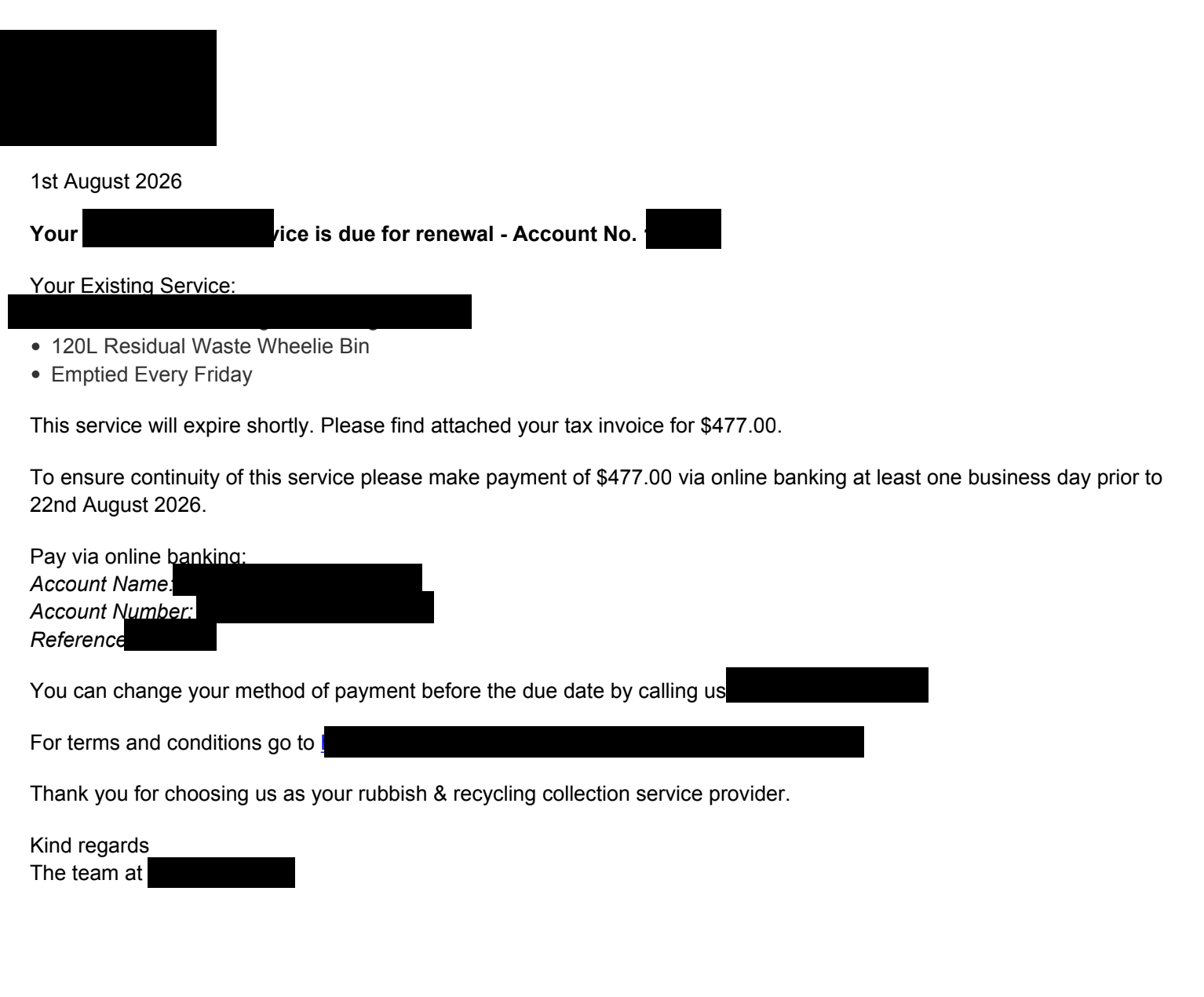
My actual renewal invoice for the same service: $477. The company name, account details, and address are redacted, but the $47 gap is exactly as described.
This is a loyalty tax. Sometimes it's called a loyalty penalty, or price walking. Either way it's price discrimination: loyal, long standing customers are charged more for the same service than customers who just joined, and the old customers end up effectively subsidising the new ones. It's reported to cost New Zealand households real money across power, insurance, and banking too, and it's completely legal.
Companies are betting that customers hate change. Cancelling a direct debit, switching collection days, shopping around, comparing quotes: all of it is friction, and friction is a barrier that stops most people switching even when staying costs them more.
There's a colder logic underneath that too. Acquiring a new customer is expensive: advertising, onboarding, changing pickup schedules, delivering a new bin. New customers are also the most price-aware people in the market, because for a genuinely undifferentiated product like rubbish collection, price is often the only reason anyone picks a provider at all. An existing customer, by comparison, is close to free revenue. They're already set up, already relying on the service, and inertia does most of the work of keeping them there. Which makes them the perfect target for small, regular price rises, as long as each one stays below the point where switching finally looks worth the hassle.
None of this is illegal under New Zealand's Fair Trading Act, so long as no one's lying to you about why the price went up. Price discrimination is everywhere: seniors' discounts, student discounts, insurance premiums that vary by age or gender. Nobody objects to most of it. The loyalty tax is the same idea, aimed the other way, at the customer's expense rather than in their favour. All you can really do is notice when it's being aimed at you, and either push back or walk.
The practical defence is mostly about removing the friction the whole model depends on. Where you can, avoid direct debit and auto-renewal: it's far easier to simply not pay an invoice than it is to ring your bank or your provider to cancel one. Put your renewal date in your calendar, and when it comes around, actually spend the ten minutes finding out what a brand new customer would pay for the same thing, because that number matters far more than last year's price with a percentage bolted on. And if you find a gap, say something. Ring or email and ask them to explain why eight years of loyalty is worth less than showing up yesterday. Sometimes that alone is enough to get it matched.
The bit companies are really relying on is that none of us talk about what we pay. Ask a friend what they're paying for power, insurance, or rubbish collection, and compare notes. You'll probably find one of you is being walked up a price ladder the other isn't on, and the only reason it's worked this long is that neither of you thought to ask.
As for my own rubbish collection, I've emailed the company asking them to explain the gap between my renewal invoice and their online quote. I'll wait to hear back, but I'm fully prepared to cancel and move to another provider if I need to. I'll keep you posted.
Update, 3 August 2026: heard back from the company. They said the rate change had only recently come into effect, and sent through a new invoice matching the online quote. That's now the cheapest price available in Wellington for the service, so I'm renewing for another year, and I'll be checking the numbers again this time next year.
More posts
2 min read
2023 Wellington Bird survey results
I've posted photos of native birds I occasionally see in my front yard a few times ( here , here and here ). The increase in birds visiting my home isn't...
1 min read
Return of the Kākā
Probably the best perk of being able to work from home is the view out of my window sill office out on to a massive pohutukawa tree. While I've lived here for...
1 min read
Kākā visitor
A Kākā visits our pohutukawa tree on a Sunday morning. This is the only good photo I could get of him - the neighbors cat was on the ground looking up at him,...
Replies
Loading replies…